


Separable and recyclable
paper and paper-based food packaging
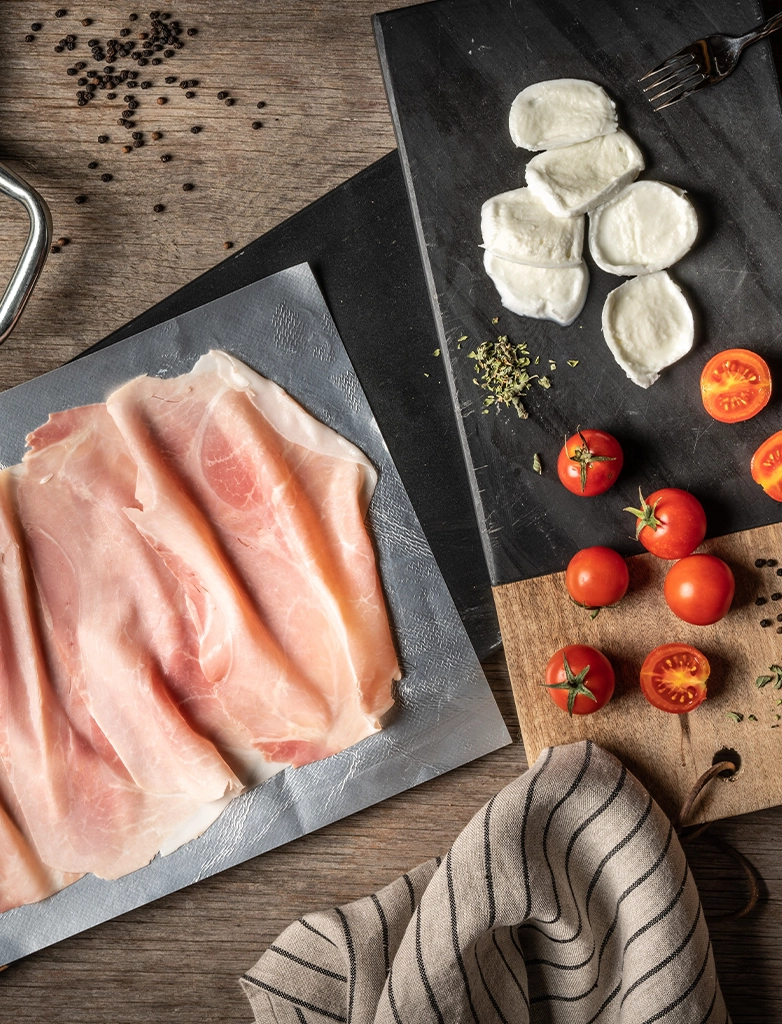
Packaging manufacturers are required to take a well-defined responsibility for the environment, because each packaging turns into waste at the end of their life-cycle. This must be managed and aligned to increasing circularity.
For this reason, our R&D Team is constantly working on how to improve the Rose packaging performances, as well as their degree of recyclability.
Our goal is to reduce the packaging impact on the environment, making it increasingly recyclable while still maintaining its high preserving features.
With this in mind, we’re working to improve all our product lines, acting on all packaging components – raw materials, thus paper weight, adhesives, inks and print coverage.
Esseoquattro has embraced transparency towards customers. Therefore, we are always ready to exchange views with our customers to offer them the best packaging solution, combining technical performances, food safety and sustainability, so that we can meet their needs.
Read our sustainability report
What sets Esseoquattro’s food packaging apart?
01
OUR APPROACH TO PACKAGING
For us at Team della Rosa, the effectiveness of food packaging relies on two essential factors: extending product shelf life—thereby helping to reduce food waste—and ensuring a rigorous selection of materials.
Our focus on design begins with the raw material: we use paper sourced from traceable supply chains and responsibly managed forests, incorporating materials into our production cycles that are PEFC (PEFC/18-31-452) or FSC® (FSC-C113392) certified.
To learn more about these certifications, please read our FAQs.
02
INNOVATION AND FUNCTIONALITY
Innovation and continuous research guide us in designing packaging intended to optimize food preservation times. The Ideabrill line—our original solution for preserving freshness and aroma—is engineered with technical features that extend product shelf life, making a tangible contribution to the fight against food waste. Furthermore, Ideabrill bags are suitable for storing food in both the refrigerator and the freezer. Finally, Ideabrill bags and wraps are designed with recycling in mind: their core components (paper and film) can be manually separated by the consumer, allowing for proper disposal through the appropriate recycling streams.
Why should you opt for flexible packaging?
Environmental benefits stemming from flexible packaging adoption
Each food needs appropriate packaging that should be selected according to their features.
If there are no liquids to be contained, paper or paper-based packaging – thus flexible packaging – is a suitable replacement for plastic or polystyrene trays, enabling to save a lot of space.
This results in significant space savings throughout the production chain with subsequent benefits like less road transport vehicles circulating for supplying, less space occupied in warehouses, as well as less waste volume to be managed.
For this reason, it’s essential for you to make an objective assessment of your own needs, without demonising any material type, by choosing your packaging according to the type of food to be packed instead and – most importantly – by recycling it in a proper way at the end of its cycle of use.